
Microsoft Teams - Effective v Efficient?
- Tracy Wilson
- Feb 25, 2025
- 3 min read

I recently heard leaked audio footage of Jamie Dimon, the CEO of JP Morgan, slamming employees for their insistence on working from home and their attitude when “attending” remote conference calls.
He was seemingly left enraged by a call that left him feeling as if people were not giving it their full attention and it got me thinking about whether this recent phenomenon that is Zoom/Microsoft Teams is an overall positive or negative for the working environment.
In the audio, he said: “A lot of you were on the f***ing and you were doing the following:
“You were looking at your mail, sending texts to each other, not paying attention and not reading your stuff.
“If you don’t think that that slows down efficiency, creativity, creates rudeness, it does and when I found out people were doing that – you don’t do that in my goddamn meetings… It simply doesn’t work.”
Between the expletives, Dimon makes an interesting point: Have we become too reliant on the convenience of remote meetings in place of establishing face to face connections?
There is no hiding from it – Microsoft Teams is here to stay and rightly so, it offers a wealth of benefits that simply weren’t utilised pre-covid.
But despite Teams becoming a staple in the diaries of millions of people, highlighting the many deficiencies surrounding the platform is vital to rectifying them before they become harmful to team cohesion, corporate cultures and business performance.
For many people, their lived experience of Teams will be less one of a convenient solution to the impracticalities around face to face meetings and rather one of being summoned to receive the outpouring of information that would work just as well in an email to be read at some point in the future.
Teams has become the new ‘CC-all’, a means of dispensing responsibility by summoning 50 people, 40 whom scarcely need to be there, so that at some point in the future, the organiser can say “you should know that, we had a Teams meeting.” At that point, it ceases to be a useful platform.
Dimon adds: “Someone told me that they had to go to 14 different committees. I am dying to get the name of the 14 committees and I feel like firing 14 chairmen of committees.”
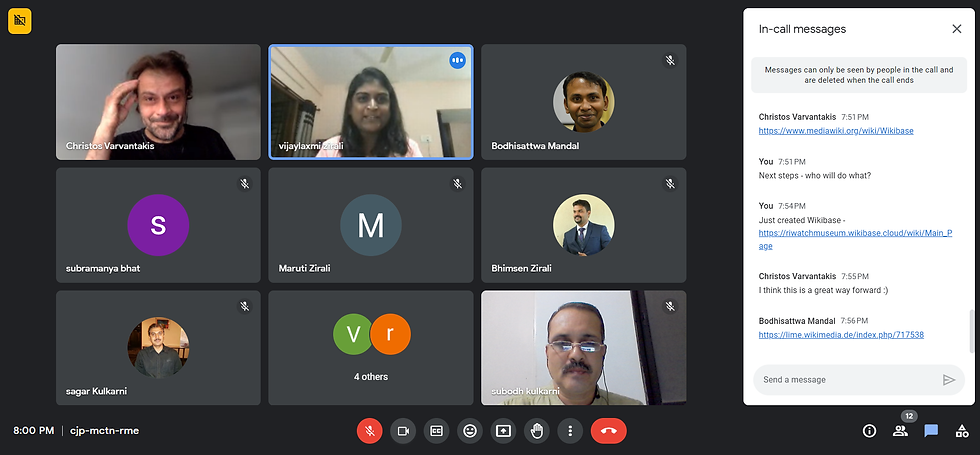
So prevalent is this reliance on Teams for Teams sake that anybody reading this will be able to point to a day this year where they have spent the vast majority of the day in back to back meetings that add little value to their role where the only impact was forcing them to catch up out of hours. In those cases, the pursuit of convenience is yielding nothing but inconvenience.
When utilised properly, Teams can easily bring people from across the country together without the need for travel, accommodation and all-day availability. But the convenience often comes at a price and on occasions, that price is not worth paying.
More often than not, that price is less engagement, less chemistry, less focus. In turn, this results in fewer questions, fewer discussions and ultimately, reduced output. Even in small groups consisting of relevant, professionals, a Teams meeting is often less productive than a face-to-face meeting.
Teams has revolutionised the modern way of working and brings with it a swathe of benefits that when used correctly can increase efficiency and productivity. But it is imperfect and not every workplace adaptation pursuit of convenience is to the benefit of the business or to the relationships between those working within it.
In his expletive-laden rant, Dimon concludes: “The young generation is being damaged by this They are being left behind socially, ideas, meeting people.” In workplaces dominated by pointless Teams calls where attending a meeting in person feels like a chore, he might just have a point.
Featured Image: https://creativecommons.org/licenses/by-nc-nd/4.0/


Comments